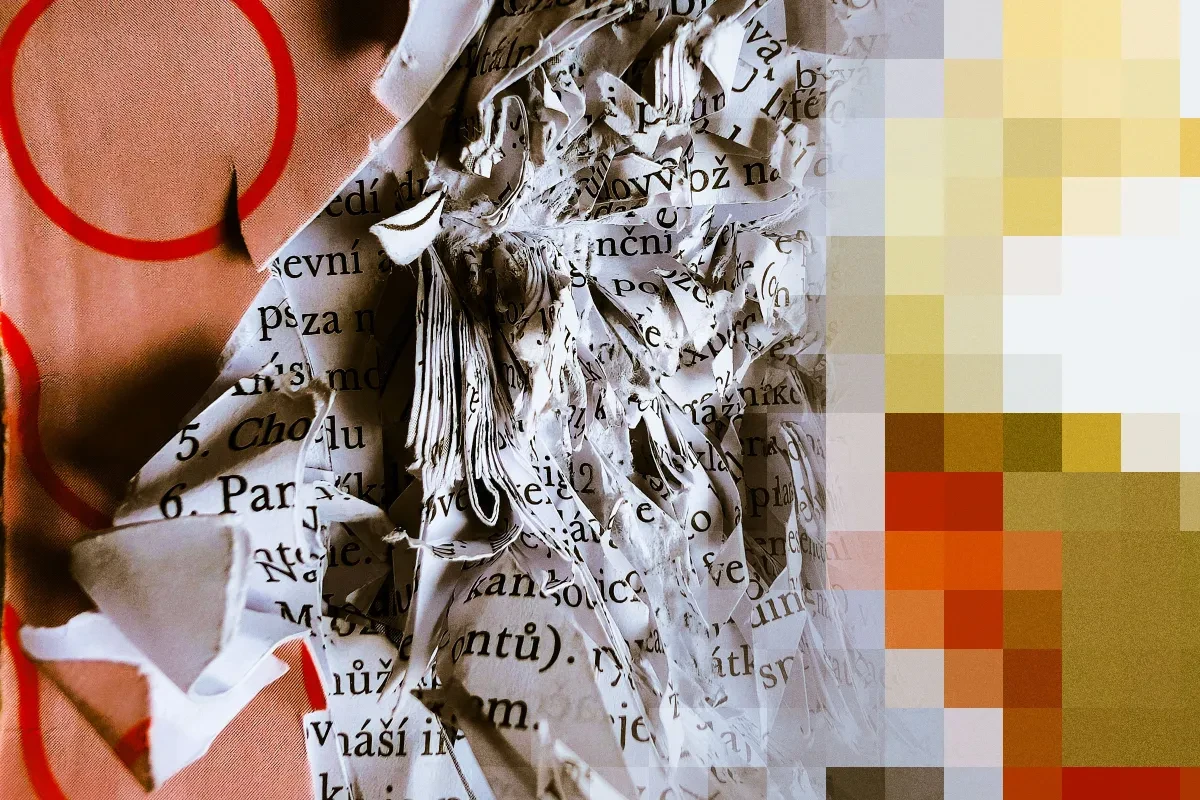
Cyberpunk. What else?
In Vernor Vinge’s 2006 novel Rainbows End, winner of the 2007 Hugo Award for Best Novel, one strand of the plot revolves around the “Librareome Project.”
Set in a high-tech 2025, the project digitizes a library by physically shredding its books, photographing the fragments, and digitally reconstructing their contents. It is fast, cheap, and irreversible: the physical collection is sacrificed so that its knowledge can be moved online.
Nearly two decades later:
Court filings revealed that Anthropic’s “Project Panama” bought millions of physical books, used hydraulic cutters to remove their bindings, scanned the loose pages at high speed, and sent the remains for recycling. The resulting digital texts were used to help build a private training library for Claude.
Anthropic may simply be the first case documented in detail. Book-data services now offer AI companies bulk purchases of up to one million physical books while promising to keep the buyers anonymous. Booksellers are reporting suspicious bulk orders, but often cannot verify who is buying the books—or what ultimately happens to them. Some collections contain rare editions and hard-to-find copies.
The original cover of Rainbows End carried the line:
“A novel with one foot in the future.”
P.S. Read the book.